Thursday, June 14, 2012

Nokia 6600i unleashed in India

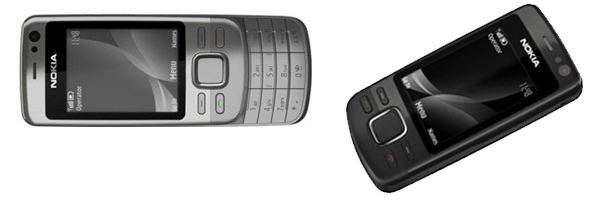
The Nokia 6600i has just been launched in India and it establishes itself as the smallest 5-megapixel phone in the market. The 6600i has a slider form factor with an extremely impressive design and style.

The camera being the phones USP promises to deliver crystal clear imaging with its 8x zoom and auto focus functionality. It also comes with a dual LED flash for enhancing image quality.

Other features include FM radio, playback for all kinds of media files/formats, stereo headsets and bluetooth v2.0. A microSD card slot capable of holding a 16GB card fits perfect for this phone.

Gamers gravitating to multiscreen experiences

 Multiscreen gaming is emerging as a major trend as consumers increasingly access games through their PCs, consoles, tablets and smartphones.
According to new research from Newzoo, 22% of the 153 million gamers in the U.S. utilize all four screens.
Those 34 million gamers will grow rapidly as Sony, Microsoft and Nintendo all featured multiscreen offerings during their news conferences last week at E3, the video game convention. The explosive growth of cloud gaming -- with new deals such as Gaikai's streaming of "Hawken" and other PC games to Samsung TVs, Facebook and tablets -- is also opening up new gaming avenues.
"We see gamers increasingly gaming across all screens," said Tony Bartel, president of video game retail chain GameStop.
"There is definitely a desire to game anytime, anywhere and on any device. However, we do also see different uses of technology. For example, the HD experience in the living room with the console or via a gaming PC and 7.1 audio is still the gold standard for immersive game play. Tablets and phones are currently used for more 'snack gaming,' with shorter play times and, generally, less immersive games."
That immersion is quickly evolving, thanks to new technology that's powering the constantly improving tablets entering the market.
Tech companies such as Intel, NVIDIA and Qualcomm are pushing the gaming capabilities of mobile devices. NVIDIA's Stark chips, which will launch in 2014, will offer 100 times more power than the current Tegra 2 chips that propel a growing number of Android devices. Qualcomm is developing original mobile games such as "Reign of Amira" to fully utilize its Snapdragon processor.

"On the software side of the equation, more games are taking advantage of being able to play on a wider range of devices and screens," said Matt Ployhar, senior product planner at Intel. "The cloud also helps improve and extend this experience by allowing gamers to either continue playing the game on other devices they may own or even provide access to such things as their game statistics or the ability to communicate with other players.
"Advancements in touch and gesture in recent years have also opened up new possibilities of game play, and we're seeing an influx of new game experiences as a result," Ployhar said.
My 5 favorite highlights from E3
"Mobile devices will be the center of this convergence revolution," agreed Kyu C. Lee, vice president and head of mobile game publisher GAMEVIL USA. "At the end of the day, every person only has 24 hours, thus I believe the mobile gaming industry will continuously grow as the amount of time users devote to mobile OS (whether it be smartphones, tablets or smart TVs) also increases. Smartphones, tablets and smart TVs are the first devices that the new generation will adopt rather than old PCs or gaming consoles."
Meanwhile, console makers are aggressively expanding their offerings to connect to the mobile world.
Microsoft's Xbox SmartGlass will allow Xbox 360 gamers to connect with any Windows, iOS or Android tablet or smartphone to open up unique in-game experiences. While playing 343 Industries' "Halo 4," for example, gamers can automatically download additional maps and information on other screens that could help Master Chief in the game.
In Electronic Arts' "Madden NFL 13," armchair quarterbacks can design custom plays on their tablet and import them into the game in their quest for the Lombardi Trophy.
Veteran game developer Peter Molyneux, head of game developer 22Cans, wants this new technology to be intuitive for game makers.
"I want SmartGlass to be seamlessly integrated into every game I have," said Molyneux. "I love touch gaming, I love hands-free gaming, but if you try to do everything, it can get confusing."
Sony showcased additional games that will allow for a continuation of game play from the PlayStation 3 console to the handheld PlayStation Vita. They're also adding PlayStation Mobile to the multiscreen mix.
"The goal would be to bring a positive PlayStation experience to gamers on a smartphone or a tablet, and ultimately migrate them into a dedicated experience on a PlayStation Vita and PS3," said Jack Tretton, president of Sony Computer Entertainment America. "Knowing that we don't want to limit ourselves; if there's a gamer out there, we want to interact with them within the PlayStation brand."
Big publishers such as Activision have embraced the multiscreen gamer with key franchises. Treyarch's "Call of Duty: Black Ops 2" will utilize an online service to let players connect with the futuristic shooter game through PC and mobile devices. The new "Skylanders Giants" game will also expand to mobile and online PC gaming experiences, allowing gamers to earn and keep virtual upgrades across all experiences.
"It's obviously a time of tremendous disruption for this industry," said Eric Hirshberg, CEO of Activision Publishing. "There have been a lot of new technologies introduced into everyday life, and I see this as a tremendous opportunity for our core business. More people are gaming than ever before, and this allows us to expand our franchises beyond the core console experience and migrate to different parts of people's lives whether that be on the Web or an iOS or Android game."
Electronic Arts is now developing each of its games -- from "FIFA 13" to "Madden NFL 13" to "The Sims" -- as multiscreen experiences. Nick Earl, senior vice president and general manager for EAi Studios, said that the key to successful games across devices is to understand the unique demographics and behaviors.
Tablet gamers are a little less mobile than smartphone gamers, and they tend to play in the home more and for longer periods of time. They also tend to purchase apps more and are made up of so-called "midcore" gamers, versus the hardcore console players or the more casual smartphone gamers.
Will Wright, the man behind multiscreen franchises such as "SimCity," "The Sims" and "Spore," sees new opportunities for game developers as more gamers log into virtual worlds from multiple access points.
"It used to be games were things that were experienced sitting, or more recently with motion controls moving, in front of a TV screen," said Wright, president of The Stupid Fun Club. "Then we saw bite-sized mobile games enter the picture. Now it's about how can we build interactive experiences that not only use these different devices, but take advantage of new technology like augmented reality to further blend the game world with the real world."
With Nintendo's Wii U launching this fall with a GamePad tablet to expand the game-play experience beyond the central TV screen, the next generation of consoles from Microsoft and Sony are expected to further embrace this multiscreen approach.
"I see tablets as very complementary to the next generation of consoles," said Bartel. "While we believe consoles will still dominate the living room, tablets offer gamers the ability to interact with and expand the console experience. The portability factor of tablets is also extremely appealing to gamers, allowing them to extend their TV experience outside their living rooms through the cloud."
As seen last week at E3, the future of gaming is multiscreen. And the experiences available on devices are quickly evolving to equal current generation console offerings.
When you factor in cloud-based gaming services, console games are already available everywhere today's gamer is. And that's changing every aspect of the game industry for the better.

Skype jumps the shark: Seven alternative VoIP services

Hundreds of millions of people use Skype for its free voice over IP (VoIP) services every day. Indeed, Skype claims that in March 2012, 35-million people were all talking at the same time on the service. But, how many of them are going to stick with it when Microsoft, Skype’s owner, sticks ads in your face?

Microsoft announced that “While on a 1:1 audio call, users will see content that could spark additional topics of conversation that are relevant to Skype users and highlight unique and local brand experiences. So, you should think of Conversation Ads as a way for Skype to generate fun interactivity between your circle of friends and family and the brands you care about.” Oh yeah, I always like having an ad pop-up when I’m talking to a friend or co-worker.

These ads, which will use your location, age and sex to better target you, will appear on Skype for Windows if you don’t have any Skype Credit or a Skype subscriptions while you’re making 1:1 Skype-to-Skype audio calls. I’m sure it will also appear on the Mac version of well. For once, the neglect Skype has long given Linux will pay off for Linux users. Skype for Linux, which is still on version 2.2 beta while Windows is up to 5.8, isn’t likely to get this “upgrade.”

Thursday, June 7, 2012

The Internet now has 340 trillion trillion trillion addresses


The Internet's address book grew from "just" 4.3 billion unique addresses to 340 undecillion (that's 340 trillion trillion trillion). That's a growth factor of 79 octillion (billion billion billion).


If it all goes right, you won't notice a thing. And that's the point.

The Internet is running out of addresses, and if nothing were done, you certainly would notice. New devices simply wouldn't be able to connect.

To prevent that from happening, the Internet Society, a global standards-setting organization with headquarters in Geneva, Switzerland; and Reston, Va., has been working for years to launch a new Internet Protocol (IP) standard called IPv6.

IP is a global communications standard used for linking connected devices together. Every networked device -- your PC, smartphone, laptop, tablet and other gizmos -- needs a unique IP address.
With IPv6, there are now enough IP combinations for everyone in the world to have a billion billion IP addresses for every second of their life.

That sounds unimaginably vast, but it's necessary, because the number of connected devices is exploding. By 2016, Cisco (CSCO, Fortune 500) predicts there will be three networked devices per person on earth. We're not just talking about your smartphone and tablet; your washing machine, wristwatch and car will be connected too. Each of those connected things needs an IP address.

Then there's all the items that won't necessarily connect to the Internet themselves, but will be communicating with other wired gadgets. Developers are putting chips into eyeglasses, clothes and pill bottles. Each one of those items needs an IP address as well.

The current IP standard, IPv4, was structured like this: xxx.xxx.xxx.xxx, with each "xxx" able to go from 0 to 255. IPv6 expands that so each "x" can be a 0 through 9 or "a" through "f," and it's structured like this: xxxx:xxxx:xxxx:xxxx:xxxx:xxxx:xxxx:xxxx. (Yes, there was an IPv5, but it was a streaming multimedia standard developed in the late 1970s that never really caught on).

The changeover is akin to when the U.S. telephone system handled soaring growth by increasing the digits in each telephone number -- except for one crucial difference. While the entire telephone system was upgraded in the 1990s, the Internet will be upgraded gradually.

IPv4 will continue to exist alongside IPv6 for quite some time, just as digital and analog TV were broadcast side-by-side for years.

Though most of the major Internet players will be IPv6 compliant going forward, many routers, devices and operating systems won't be. For instance, Microsoft (MSFT, Fortune 500) Windows XP, the world's most-used PC operating system, is not IPv6-compliant.

Just 1% of end users are expected to now be reaching websites using the IPv6 standard. The Internet Society expects that to gradually grow as users update their software and hardware.

Most of the major websites and networks are already participating. More than 2,000 websites, including Google (GOOG, Fortune 500), Facebook (FB), Bing, Yahoo (YHOO, Fortune 500), AOL (AOL) and Netflix (NFLX), as well as a number of network operators such as AT&T (T, Fortune 500), Verizon (VZ, Fortune 500), Comcast (CMCSA) and Time Warner Cable (TWC, Fortune 500), have begun enabling IPv6.

But they'll all need to continue to support IPv4 until the entire world upgrades. That will take years.
There have been some grumblings about cyberattackers getting ready to pounce on Wednesday, taking advantage of potential holes in a new technology. But a year ago, on June 8, 2011, all those participating networks and sites turned on IPv6 for a day-long test run without a hitch.

They reverted to IPv4 the next day. This time, the change is permanent. It'll be a slow transition, but it's a crucial one that will support the Internet's current rate of expansion far into the future. 


Google to offer more 3-D, offline maps


Google unveiled some upgrades to its mapping software on Wednesday ahead of Apple's expected announcement that it will ditch Google Maps on iPhones and iPads in favor of its own technology.

At a news conference at its San Francisco office, Google previewed a handful of upcoming features, including the ability to use Google maps without an Internet connection. Android users will be able to take maps offline from more than 100 countries and access them when they're out of Wi-Fi range or on the subway, for example.

"No longer will you need paper maps," said Rita Chen, a product manager for Google.

The offline mode is expected to become available for Android devices within a few weeks. There was no word on whether that feature will extend to other devices, such as the iPhone. Apple, however, is expected to announce at its developers conference next week that it's dropping Google's mapping app for its own version.

Other new features will include more detailed 3-D mapping of urban areas. Google said it will begin to add 3-D images of buildings to its Google Earth app for mobile devices. This will require chartered airplanes equipped with Google cameras flying over cities to capture the imagery.

"We're trying to create the illusion that you are flying over the city, almost as if you were in your own personal helicopter," said Peter Birch, another product manager.

Google also showed off a new backpack unit, nicknamed Trekker, that will allow for more images of remote, off-road places best reached on foot. The backpacks are rigged with cameras that technicians can use to snap Street View images of hiking trails and other wilderness locations, such as national parks.


It's war: Google + Quickoffice vs. Microsoft Office everywhere


Google Docs has made some inroads against Microsoft Office, but not nearly enough.

That’s no doubt a big reason for Google’s latest acquisition, Quickoffice, announced on June 5. Now the question becomes will the cross-mobile-platform productivity suite Quickoffice — give Google a better leg up against Microsoft’s Office? Quickoffice runs on iPhones, iPad, Android, Android tablets and Symbian devices. And Office 15, the coming version of Microsoft’s productivity app suite, will run on Windows 7, Windows 8, Windows RT, Windows Phone and, perhaps soon the iPad and Android, too.

The Office 15 (a k a Office 2013, the public beta of which could arrive by mid-June) + Windows 8 one-two punch is expected to help Microsoft in the both the x86/x64-based and ARM-based tablet market.


The Office card is likely to be especially key to the coming wave of ARM tablets, as Microsoft officials have said previously that four Office 15 apps (Word, Excel, PowerPoint and OneNote) will be “included” with Windows on ARM — now known as Windows RT — devices. We still don’t know exactly what “included” means. Nor do we know whether these four apps will be full versions, local versions or maybe even remotely hosted versions. (I’m still thinking Microsoft is planning on some kind of OEM-pre-installed Starter-Edition type versions for Windows RT devices.)

On May 31, Morgan Stanley published a research report entitled “Tablet Landscape Evolution: Window(s) of Opportunity.” One of the paper’s conclusions: Microsoft has “shifted from a challenged to a best-positioned company in the tablet market, as Windows 8 with Office has the potential to drive market growth and share gains.” The authors continue: “Our survey suggests 25% of users expect to buy Windows 8 tablet and Office is a key feature, especially for those considering their first tablet purchase.”

It will be interesting to see if Microsoft provides its Windows 8 tablets with some breathing room by introducing Office 15 for Windows and Windows RT first, followed by iOS and possibly Android months later. Some inside and outside the company think this would be the smart thing to do. Others think that Office, and not Windows, has become the lead cash cow at Microsoft, and that Office shouldn’t have its priorities and strategies dictated by Windows any more.


There’s one other noteworthy tidbit in the Morgan Stanley paper which is related to Microsoft’s and, ultimately, Google’s future success with office suites on mobile devices. Morgan Stanley is predicting Microsoft will offer OEMs a bundle of Windows 8 and Office 15 for anywhere between $82 to $114 per copy for them to preload on new PCs.

Microsoft officials, unsurprisingly, won’t share their OEM price lists. But that range may not be far off the mark. One of my contacts the $50 price range (for an OEM copy) has been thrown around before with Windows 7 Home Premium, “so it stands to reason that Windows 8 is the same.” Throw in Office 15 for around $32 to $54 per copy if Morgan Stanley’s pricing is right, and you’ve got yourself a bundle!

Google may take the same approach it has been pursuing with Docs and Apps and simply undercut Microsoft to try to gain more of a foothold in the productivity suite space.


5 reasons everyone will be using Chrome OS in 3 years

Google’s first round of Chromebooks met with mixed reviews and far greater adoption in schools where their easy management and fast boot times made them more popular than with consumers. Google and Samsung announced yesterday that next-generation Chromebooks were rolling out, along with a major release of Chrome OS and new devices call Chromeboxes. All in all, it was a big day for Chrome OS, and yet, as Larry Dignan pointed out, the pricing on Chrome OS devices remains too high for serious consumer or enterprise adoption.


1. It’s going to be cheap
Yes, Larry’s right. These devices are too expensive right now. But Moore’s Law tells us that this will change. Fast. And Chrome OS doesn’t need the latest hardware to run quite well, particularly now that it can take advantage of GPU acceleration. Sure, the original Atom-based Chromebooks were a bit pokey, but enhancements to the OS itself have taken big steps to address the issue. The latest generation of Chrome OS devices aren’t exactly using quad-core beasts. They’re leveraging commodity hardware, paving the way for serious price drops in the relatively near future.

Chrome OS is also being tested on ARM hardware and is unencumbered by much in the way of licensing since it’s based on the open source Chromium OS project.

2. It’s flexible
Have you used the Chrome Web Store? There’s a lot of really useful software just a click away that runs right within the browser. Whether you are using Chrome OS or the Chrome web browser, the experience is the same and the developer ecosystem is pushing hard on the boundaries of what we thought was possible in terms of web applications. The variety of applications already available in the Web Store is impressive, to say the least, just a year and half after its launch.

If Netflix, Facebook, Angry Birds, and Autodesk applications can all run happily in Chrome OS, there won’t be much to differentiate it from a full-blown desktop OS in the months and years to come. Or from an embedded OS. Or a mobile OS. It all depends on the applications OEMs choose to develop, surface, and install for users.


3. Because Chrome OS and Android will merge
As early as 2009, Sergey Brin predicted that Android and Chrome OS would likely draw closer to each other and then merge. The Chrome browser for Android is hinting that this is getting closer to reality, as are various bits of information emerging about Android 5, most of which point to at least the beginnings of unification.

Android is already dominant in mobile devices and runs on everything from televisions to refrigerators to tablets. Chrome has the largest browser marketshare now. When Chrome, Chrome OS, and Android all start looking very much like each other and all dominate their respective markets, it’s not a big stretch to start calling Chrome OS ubiquitous.


4. It’s Google
If Google has proved anything, it’s that they have enough money to keep hammering away at a market until they own it. They proved it with Android on mobile phones. They proved it with their Chrome browser. They proved it with search and related ads. They’ve had their share of missteps and projects like Google+ remain out with the jury. However, if the project is ultimately about growing their core business (namely advertising) and getting ads in front of more people, they’re absolutely dogged. And while their war chest isn’t quite up to Apple’s standards, they can win wars of attrition with just about anyone. Besides, what would you rather see on that connected television? A familiar web browser with snappy app interfaces and a cool Web Store or some kludgy Java interface that doesn’t look a thing like what you use on your desktop, laptop, mobile phone, or tablet to access content?


5. Because the web will be all you need
This is already true for most users. In developing countries, the only personal computing device that many people own is a simple mobile phone with basic web access. Elsewhere, cloud-based applications continue to displace desktop applications and increasing numbers of users spend their days staring at a web browser instead of any particular application. Microsoft’s Office 365 acknowledges the need for at least a hybrid approach to the cloud and most of the interesting software we read about now comes in the form of cloud-based web applications or mobile apps.

Even Adobe, the last reason I bother using a full-blown PC, started shipping Muse (a rich WYSIWYG web development platform) this month and, while not a web application itself, leverages the Air runtime environment to be small, light, and fast.

The next version of Bethesda Software’s massively popular and visually stunning Elder Scrolls series? An MMORPG. No, it won’t be 100% browser-based, but without the web, fans would just be sitting in front of their aging XBOXes. Goodbye game consoles, hello cloud.

This webification movement has taken off in the last 18 months. It isn’t hard to imagine what the next three years will do to the way we think about personal computing. So while Chrome OS got off to a slow start, it’s only a matter of time until Google can take advantage of this inflection point at which we find ourselves.