Monday, June 18, 2012

Give Microsoft credit for betting the farm


Microsoft’s Windows 8 and its Metro UI has sparked extreme reactions and there appears to be little middle ground. Windows 8 will either be a hit or the next Vista. But let’s give Microsoft credit for making one gutsy bet.
In short, Microsoft is looking to unify its phone, desktop and tablet interfaces. That move alone is pretty ballsy. Even more ballsy is that Microsoft is upending years of user habits and offering a UI that reshapes the software vendor’s approach to computing. Microsoft is trying to make its customers think different.
Yes, Microsoft is still trying to appeal to multiple devices. But the software giant is essentially ripping up a UI that we’re all used to. Some customers will like it and adapt. Others will complain—loudly. And given the relatively weak uptake of Windows Phone, consumers don’t have a lot of experience with the Metro UI.

Friday, June 15, 2012

Windows8 Advantages and Disadvantages

Windows8 Advantages
  1. The new Windows 8 is touch-enabled. A user with a touch screen device will receive even greater benefits from using the operating system. Windows 8 can function using sensors to detect proximity and motion, although these features will not yet be available on PC.
  2. Windows 8 may simplify password usage across the board. Windows 8 may include a security feature that will store user names and passwords for a number of websites, making it easy to log in to all of your favorite sites quickly and securely. 
Windows8 Disadvantages
Metro UI
  1. Some of the new features of windows8 does not compatabile with the existing hardware. Customers have to buy new computer which supports windows8.
  2. Windows 8 uses a new UI called "MetroUI".At first it's very difficult to use this interface. Icons are spread across the entire screen. 
  3. The new Windows 8 interface has a similar layout to Windows-based smartphones, using tiles with touch capabilities on tablets and equipped PCs. Users can also switch back to the desktop mode, which looks similar to Windows 7. But a complete Start menu will be lacking. The new Start menu has only four options, making the new interface entirely unfamiliar to loyal Windows users.

Thursday, June 14, 2012

Opera 12 released with integrated mail client, wider support and more


Opera has always been the dark-horse of web browsers, known for its strict adherence to web standards, apart from being known for its speed. The newest version of the browser, Opera 12 (available on Windows, Linux and Mac) brings with it a significant number of improvements with regards to performance, stability and security.

To begin with, Opera has always known for its phenomenal cold-boot times (The time from when you click on the icon to when the application loads) Opera 12 has managed to further improve its startup time with a new smart tab-loading sequence for restoring previously opened tabs. New APIs allow developers to access the computer’s webcam as well as better support for browser windows and tabs in extensions. Notably, Opera has decided to discontinue its Opera Widgets and Opera Voice, and is urging developers to create extensions for the browser instead, using the new and improved APIs.

This is aimed at providing a more cohesive experience across the various devices and platforms that Opera (along with Opera Mini and Opera Mobile) supports. The new version brings with it support for right-to-left scripts such as Urdu, Hebrew, Arabic and Farsi, along with newer themes and better support for web standards such as CSS3 and HTML5, along with support for a do-not-track option, akin to browsers such as Mozilla Firefox (read our Firefox 13 review) and Google Chrome. Websites that use SSL encryption for secure transmission of data will now show colour-coded security badges in the address bar.

Opera includes its flagship features such as Opera Turbo which compresses web pages for faster page loading and Opera Linkwhich syncs your passwords, bookmarks, history and extensions between devices. Opera has a sizeable collection of extensions, including popular ones like Buffer, LastPass, Instapaper and Klippt. The inclusion of an integrated mail and chat client, tab preview on hovering over a tab and the stunning interface are obvious plus points. Opera also lets you group tabs together into stacks to save space on the tab bar. The stacks can be compressed when not needed and expanded later.

With Opera 12 You can also browse through your recently closed tabs with a single click, and Opera has one of the best Speed Dial implementations on any browser, ever. The Linux variant (specifically the x64 build) of Opera 12 had some issues though. Certain sans serif fonts weren’t aliased correctly, giving them a jagged look, and tooltips weren’t styled correctly, making them difficult to read. Opera’s memory usage was on the higher side, but it resulted in a very quick and responsive browsing experience. Page loading, switching between tabs, highlighting and scrolling through text were very fluid

All in all, Opera 12 makes for a compelling experience, with a combination of speed, performance and stability, great support for web standards, a great collection of extensions and some unique features built-into the browser. If you haven’t used Opera in a while, give it a try, you might make the switch!

Twitter adds more media partners to Expanded Tweets function


Twitter is building on their Expanded Tweets functionality by adding a wealth of new media partners to the program. Already in place for YouTube and Instagram content, Expanded Tweets allows a user to preview a link right on the site before clicking to leave the microblogging website.

The service will let users see a preview of participating sites’ content that can include a story headline, introductory paragraph, byline, images and even video. The blog post announcing the added media partners lists plenty, including but not limited to The Wall Street Journal, Time, MSNBC, The New York Times, The Los Angeles Times, The San Francisco Chronicle, Der Spiegel Online, BuzzFeed and TMZ – and that’s just in the “news” category.

Users who find content they like are encouraged to follow the account that posted it, reply, favorite or retweet the original Tweet.

As GigaOm points out, Twitter appears to slowly be morphing into somewhat of a media company, despite their CEO claiming otherwise on multiple occasions. Case in point is the recent partnership with NASCAR that was designed to help fans find live Tweets about last weekend’s race. Other examples include Twitter working with the Super Bowl and Fox’s The X Factor to enhance the tweeting and viewing experience.

The company has started rolling out the new feature to all users. Those using Twitter on Android handsets and the iPhone will have to wait a bit longer to get in on the action, as those updates are “coming soon.”


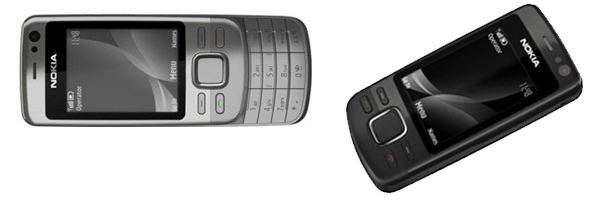
Nokia 6600i unleashed in India

The Nokia 6600i has just been launched in India and it establishes itself as the smallest 5-megapixel phone in the market. The 6600i has a slider form factor with an extremely impressive design and style.

The camera being the phones USP promises to deliver crystal clear imaging with its 8x zoom and auto focus functionality. It also comes with a dual LED flash for enhancing image quality.

Other features include FM radio, playback for all kinds of media files/formats, stereo headsets and bluetooth v2.0. A microSD card slot capable of holding a 16GB card fits perfect for this phone.

Gamers gravitating to multiscreen experiences

 Multiscreen gaming is emerging as a major trend as consumers increasingly access games through their PCs, consoles, tablets and smartphones.
According to new research from Newzoo, 22% of the 153 million gamers in the U.S. utilize all four screens.
Those 34 million gamers will grow rapidly as Sony, Microsoft and Nintendo all featured multiscreen offerings during their news conferences last week at E3, the video game convention. The explosive growth of cloud gaming -- with new deals such as Gaikai's streaming of "Hawken" and other PC games to Samsung TVs, Facebook and tablets -- is also opening up new gaming avenues.
"We see gamers increasingly gaming across all screens," said Tony Bartel, president of video game retail chain GameStop.
"There is definitely a desire to game anytime, anywhere and on any device. However, we do also see different uses of technology. For example, the HD experience in the living room with the console or via a gaming PC and 7.1 audio is still the gold standard for immersive game play. Tablets and phones are currently used for more 'snack gaming,' with shorter play times and, generally, less immersive games."
That immersion is quickly evolving, thanks to new technology that's powering the constantly improving tablets entering the market.
Tech companies such as Intel, NVIDIA and Qualcomm are pushing the gaming capabilities of mobile devices. NVIDIA's Stark chips, which will launch in 2014, will offer 100 times more power than the current Tegra 2 chips that propel a growing number of Android devices. Qualcomm is developing original mobile games such as "Reign of Amira" to fully utilize its Snapdragon processor.

"On the software side of the equation, more games are taking advantage of being able to play on a wider range of devices and screens," said Matt Ployhar, senior product planner at Intel. "The cloud also helps improve and extend this experience by allowing gamers to either continue playing the game on other devices they may own or even provide access to such things as their game statistics or the ability to communicate with other players.
"Advancements in touch and gesture in recent years have also opened up new possibilities of game play, and we're seeing an influx of new game experiences as a result," Ployhar said.
My 5 favorite highlights from E3
"Mobile devices will be the center of this convergence revolution," agreed Kyu C. Lee, vice president and head of mobile game publisher GAMEVIL USA. "At the end of the day, every person only has 24 hours, thus I believe the mobile gaming industry will continuously grow as the amount of time users devote to mobile OS (whether it be smartphones, tablets or smart TVs) also increases. Smartphones, tablets and smart TVs are the first devices that the new generation will adopt rather than old PCs or gaming consoles."
Meanwhile, console makers are aggressively expanding their offerings to connect to the mobile world.
Microsoft's Xbox SmartGlass will allow Xbox 360 gamers to connect with any Windows, iOS or Android tablet or smartphone to open up unique in-game experiences. While playing 343 Industries' "Halo 4," for example, gamers can automatically download additional maps and information on other screens that could help Master Chief in the game.
In Electronic Arts' "Madden NFL 13," armchair quarterbacks can design custom plays on their tablet and import them into the game in their quest for the Lombardi Trophy.
Veteran game developer Peter Molyneux, head of game developer 22Cans, wants this new technology to be intuitive for game makers.
"I want SmartGlass to be seamlessly integrated into every game I have," said Molyneux. "I love touch gaming, I love hands-free gaming, but if you try to do everything, it can get confusing."
Sony showcased additional games that will allow for a continuation of game play from the PlayStation 3 console to the handheld PlayStation Vita. They're also adding PlayStation Mobile to the multiscreen mix.
"The goal would be to bring a positive PlayStation experience to gamers on a smartphone or a tablet, and ultimately migrate them into a dedicated experience on a PlayStation Vita and PS3," said Jack Tretton, president of Sony Computer Entertainment America. "Knowing that we don't want to limit ourselves; if there's a gamer out there, we want to interact with them within the PlayStation brand."
Big publishers such as Activision have embraced the multiscreen gamer with key franchises. Treyarch's "Call of Duty: Black Ops 2" will utilize an online service to let players connect with the futuristic shooter game through PC and mobile devices. The new "Skylanders Giants" game will also expand to mobile and online PC gaming experiences, allowing gamers to earn and keep virtual upgrades across all experiences.
"It's obviously a time of tremendous disruption for this industry," said Eric Hirshberg, CEO of Activision Publishing. "There have been a lot of new technologies introduced into everyday life, and I see this as a tremendous opportunity for our core business. More people are gaming than ever before, and this allows us to expand our franchises beyond the core console experience and migrate to different parts of people's lives whether that be on the Web or an iOS or Android game."
Electronic Arts is now developing each of its games -- from "FIFA 13" to "Madden NFL 13" to "The Sims" -- as multiscreen experiences. Nick Earl, senior vice president and general manager for EAi Studios, said that the key to successful games across devices is to understand the unique demographics and behaviors.
Tablet gamers are a little less mobile than smartphone gamers, and they tend to play in the home more and for longer periods of time. They also tend to purchase apps more and are made up of so-called "midcore" gamers, versus the hardcore console players or the more casual smartphone gamers.
Will Wright, the man behind multiscreen franchises such as "SimCity," "The Sims" and "Spore," sees new opportunities for game developers as more gamers log into virtual worlds from multiple access points.
"It used to be games were things that were experienced sitting, or more recently with motion controls moving, in front of a TV screen," said Wright, president of The Stupid Fun Club. "Then we saw bite-sized mobile games enter the picture. Now it's about how can we build interactive experiences that not only use these different devices, but take advantage of new technology like augmented reality to further blend the game world with the real world."
With Nintendo's Wii U launching this fall with a GamePad tablet to expand the game-play experience beyond the central TV screen, the next generation of consoles from Microsoft and Sony are expected to further embrace this multiscreen approach.
"I see tablets as very complementary to the next generation of consoles," said Bartel. "While we believe consoles will still dominate the living room, tablets offer gamers the ability to interact with and expand the console experience. The portability factor of tablets is also extremely appealing to gamers, allowing them to extend their TV experience outside their living rooms through the cloud."
As seen last week at E3, the future of gaming is multiscreen. And the experiences available on devices are quickly evolving to equal current generation console offerings.
When you factor in cloud-based gaming services, console games are already available everywhere today's gamer is. And that's changing every aspect of the game industry for the better.

Skype jumps the shark: Seven alternative VoIP services

Hundreds of millions of people use Skype for its free voice over IP (VoIP) services every day. Indeed, Skype claims that in March 2012, 35-million people were all talking at the same time on the service. But, how many of them are going to stick with it when Microsoft, Skype’s owner, sticks ads in your face?

Microsoft announced that “While on a 1:1 audio call, users will see content that could spark additional topics of conversation that are relevant to Skype users and highlight unique and local brand experiences. So, you should think of Conversation Ads as a way for Skype to generate fun interactivity between your circle of friends and family and the brands you care about.” Oh yeah, I always like having an ad pop-up when I’m talking to a friend or co-worker.

These ads, which will use your location, age and sex to better target you, will appear on Skype for Windows if you don’t have any Skype Credit or a Skype subscriptions while you’re making 1:1 Skype-to-Skype audio calls. I’m sure it will also appear on the Mac version of well. For once, the neglect Skype has long given Linux will pay off for Linux users. Skype for Linux, which is still on version 2.2 beta while Windows is up to 5.8, isn’t likely to get this “upgrade.”